
Difference Between Coated Calcium Carbonate and Calcium Carbonate in Kenya
Understanding the difference between coated calcium carbonate and calcium carbonate is important for manufacturers, construction companies, plastics industries, paint manufacturers, paper processing industries, rubber factories, animal feed companies, and many other industrial sectors in Kenya and East Africa.
Although both products originate from calcium carbonate minerals, they differ significantly in processing, surface treatment, performance, compatibility, industrial applications, pricing, and final product quality.
At Industrial Materials Kenya, we supply premium-quality coated calcium carbonate and uncoated calcium carbonate to industries across Kenya, Uganda, Tanzania, Rwanda, South Sudan, Congo, and other East African countries. Our products are trusted for consistency, purity, whiteness, particle size distribution, and superior industrial performance.
For orders and inquiries:
Phone: 0769 723 154
Email: info@industrialmaterials.co.ke
What is Calcium Carbonate?
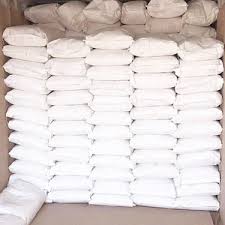
Calcium carbonate (CaCO₃) is a naturally occurring mineral commonly obtained from limestone, marble, or chalk deposits. It is one of the most widely used industrial minerals globally because of its affordability, versatility, whiteness, and chemical properties.
Uncoated calcium carbonate is essentially the raw or processed mineral without any surface treatment.
It is commonly available in powder form and used in:
- Paint manufacturing
- Construction
- Cement production
- Animal feeds
- Paper manufacturing
- Adhesives
- Rubber manufacturing
- Ceramics
- Agriculture
- Water treatment
- Pharmaceuticals
- Glass manufacturing
Calcium carbonate is highly valued because it:
- Improves bulk density
- Enhances whiteness
- Reduces production costs
- Acts as a filler material
- Improves mechanical properties
- Provides opacity and brightness
What is Coated Calcium Carbonate?
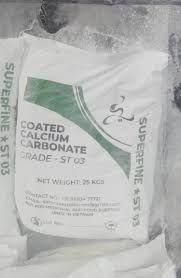
Coated calcium carbonate is calcium carbonate powder that has undergone surface treatment using coating agents such as stearic acid or other surfactants.
The coating process changes the surface characteristics of the calcium carbonate particles, making them more compatible with polymers, plastics, rubber compounds, and hydrophobic systems.
The coating improves:
- Dispersion
- Flowability
- Moisture resistance
- Polymer compatibility
- Mechanical strength
- Surface smoothness
- Product finish
Coated calcium carbonate is especially preferred in industries requiring high-performance fillers and premium-quality finished products.
Main Difference Between Coated Calcium Carbonate and Calcium Carbonate
The primary difference lies in the surface treatment.
Uncoated Calcium Carbonate
- Natural mineral powder
- Hydrophilic surface
- Absorbs moisture easily
- Lower compatibility with polymers
- Lower production cost
- Common filler applications
Coated Calcium Carbonate
- Surface-treated with stearic acid
- Hydrophobic surface
- Better moisture resistance
- Excellent polymer compatibility
- Higher performance in plastics and rubber
- Improved processing characteristics
Applications of Uncoated Calcium Carbonate
1. Construction Industry
Used in:
- Cement manufacturing
- Mortars
- Wall putty
- Tile adhesives
- Construction fillers
2. Paint Industry
Used as:
- Extender pigment
- Filler
- Whiteness enhancer
3. Animal Feed Industry
Provides calcium supplementation for:
- Poultry feeds
- Livestock feeds
- Aquaculture feeds
4. Paper Industry
Used for:
- Brightness enhancement
- Smoothness
- Opacity improvement
5. Agriculture
Used for:
- Soil conditioning
- pH control
- Fertilizer formulation
Applications of Coated Calcium Carbonate
1. Plastic Industry
Coated calcium carbonate is widely used in:
- PVC pipes
- Plastic furniture
- Masterbatch production
- Polypropylene products
- Polyethylene films
Benefits include:
- Improved mechanical strength
- Better processing
- Reduced production cost
- Enhanced surface finish
2. Rubber Industry
Used in:
- Tyres
- Rubber mats
- Footwear
- Hoses
- Rubber seals
It improves:
- Elasticity
- Durability
- Tensile strength
3. Cable Industry
Enhances:
- Insulation properties
- Smooth extrusion
- Heat resistance
4. Paint and Coatings
Premium paints use coated calcium carbonate because it:
- Enhances gloss
- Improves smoothness
- Increases scrub resistance
- Reduces moisture absorption
Benefits of Coated Calcium Carbonate
Improved Dispersion
The coating helps particles spread evenly throughout formulations.
Better Moisture Resistance
The hydrophobic coating minimizes water absorption.
Enhanced Mechanical Properties
Improves:
- Tensile strength
- Flexibility
- Durability
Cost Reduction
Manufacturers reduce polymer consumption while maintaining quality.
Better Surface Finish
Products appear smoother and more attractive.
Increased Production Speed
Better processing characteristics improve manufacturing efficiency.
Benefits of Uncoated Calcium Carbonate
Lower Cost
More affordable for general filler applications.
Easy Availability
Widely used across many industries.
Excellent Whiteness
Provides brightness and opacity.
Versatile Applications
Suitable for multiple industries.
High Calcium Content
Ideal for animal feed and agricultural use.
Why Industrial Materials Kenya is the Leading Supplier
At Industrial Materials Kenya, we provide high-quality coated and uncoated calcium carbonate tailored to industrial needs.
Why Clients Choose Us
1. High Purity Products
We supply premium industrial-grade materials.
2. Consistent Particle Size
Uniform quality improves manufacturing efficiency.
3. Competitive Prices
Affordable rates for bulk and retail buyers.
4. Reliable Supply
Consistent availability across Kenya and East Africa.
5. Technical Support
We help clients choose suitable grades for their applications.
6. Fast Delivery
Prompt nationwide delivery services.
Frequently Asked Questions (FAQs)
What is the difference between coated calcium carbonate and normal calcium carbonate?
Coated calcium carbonate has a surface treatment that improves compatibility with plastics, rubber, and polymers, while normal calcium carbonate is untreated.
Why is coated calcium carbonate more expensive?
The coating process involves additional processing, chemicals, and equipment, increasing production costs.
Which industries use coated calcium carbonate most?
Plastics, rubber, cable, PVC, paint, and masterbatch industries.
Is coated calcium carbonate waterproof?
It is not completely waterproof, but it has significantly improved moisture resistance compared to uncoated calcium carbonate.
Can coated calcium carbonate be used in paints?
Yes. It improves gloss, smoothness, and paint durability.
Is uncoated calcium carbonate suitable for plastics?
It can be used in some plastic applications, but coated calcium carbonate generally performs much better.
What is the role of stearic acid in coated calcium carbonate?
Stearic acid creates a hydrophobic surface that improves compatibility with polymers.
Does coated calcium carbonate improve product quality?
Yes. It enhances dispersion, smoothness, strength, and overall product performance.
Which calcium carbonate is best for PVC pipes?
Coated calcium carbonate is generally preferred because of its superior compatibility and processing characteristics.
Where can I buy coated calcium carbonate in Kenya?
You can purchase high-quality coated calcium carbonate from Industrial Materials Kenya
Conclusion
At Industrial Materials Kenya, we are committed to supplying premium-quality coated and uncoated calcium carbonate products to industries throughout Kenya and East Africa.
For orders, technical support, and pricing:
Phone: 0769 723 154
Email: info@industrialmaterials.co.ke